

News
Building Resilience in Teens
03 Jul 2026
Tartan Blog

Are you comfortable being uncomfortable?
One of the most important skills we can help young people develop is not confidence, talent, or even academic ability. It is the ability to remain steady when life feels uncomfortable.
I have many fond memories of when my three girls were babies, but I also have some that quite frankly I wouldn’t care to experience again. One of those was ‘tummy time’. Watching your beautiful helpless baby struggling to lift their head repeatedly through groans and cries only to have it plop down again on the mat was torture for me. None of us like to see our children struggle, yet it was so key for them to develop core and neck strength. The struggle had purpose and it built strength. The same was true in the process of learning to walk – a process of repeated falls and failures that ended in ultimate success. Very little that is important comes easily or without effort and struggle.
As adults, it is natural to want to protect young people from stress, disappointment, awkwardness, or failure. We care deeply about their wellbeing. However, research in adolescent development consistently shows that resilience is not built through comfort alone. Resilience grows when young people face manageable challenges, experience setbacks, and discover they are capable of working through them.
Adolescence is a critical stage where the brain is still developing skills such as emotional regulation, problem-solving, and perseverance. When students avoid all discomfort, they can unintentionally miss opportunities to strengthen these important capacities. In contrast, when they learn to tolerate uncertainty, frustration, and challenge, they become more adaptable, confident, and resilient.
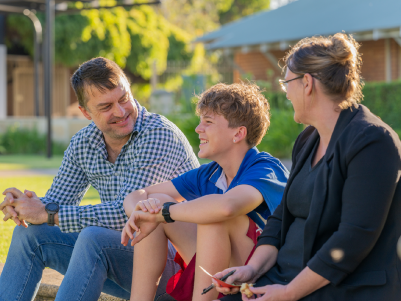
This does not mean young people should be overwhelmed or left unsupported. Rather, it means helping them understand that discomfort is not always a sign that something is wrong. Sometimes discomfort is evidence that growth is occurring.
We see this regularly in schools:
- Speaking in front of a class despite feeling nervous
- Trying out for a team after previously missing selection
- Having difficult conversations with friends
- Persisting with a subject that feels challenging
- Taking responsibility after making a mistake
- Participating in camps, hikes, or service activities outside their comfort zone
These moments matter. They teach young people that they can do hard things.
As parents, one of the most valuable things we can do is resist the urge to immediately remove every obstacle. Instead, we can walk beside our children while they navigate difficulty. Sometimes that means listening without instantly solving the problem. Sometimes it means encouraging them to stay committed when quitting would feel easier. Sometimes it means reminding them that nerves, discomfort, and uncertainty are normal parts of life.
A helpful question to ask adolescents is: “Is this dangerous, or is it just uncomfortable?”
Often, the answer is that it is simply uncomfortable, and discomfort is where growth frequently begins.
The goal is not to raise young people who never struggle. The goal is to raise young people who know they can handle struggle.
In a world that increasingly offers instant solutions and quick escape from discomfort, resilience may become one of the defining strengths of this generation. By helping our adolescents lean into challenge rather than avoid it, we equip them with skills that extend far beyond school: perseverance, courage, adaptability, and self-belief.
Growth rarely happens in comfort zones. More often, it happens one difficult step at a time.
If these comments spark your interest, there are many resources available to guide us through the challenges of parenting. Try one of the websites below or email our Counsellors for recommendations on other useful resources.
Developing Resilience in Teens
Claire Eaton Facebook Page – Youth Coach and Author



%20(800%20x%20560%20px).png)