
News
Word Origins - Language Approach
08 Jun 2026
Tartan Blog
News
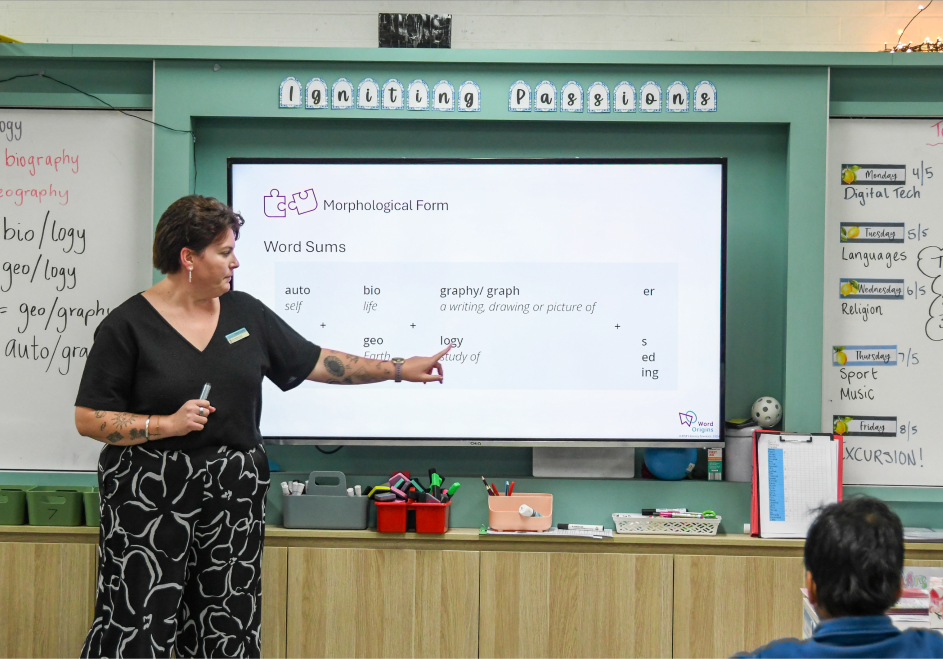
Last year, JSR piloted the Dyslexia – Speld Foundation(DSF) Word Origins Program in a Year 3 classroom. Mrs Katie Connell took on the initiative with a passion that could not be ignored, and with the data informed impact of student learning, the results were immediate and encouraging. What began as a trial initiative has now grown into a middle and upper primary approach, with all Year 3 to 6 classes implementing the program in 2026. Watching this expansion has been incredibly rewarding, as it reflects both the success of Word Origins and the enthusiasm of staff and students.
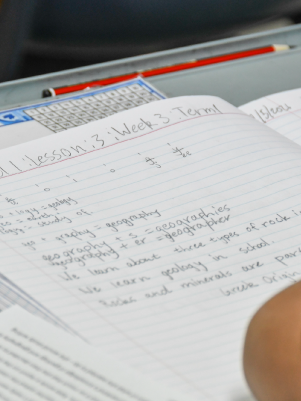
At the heart of the Word Origins Program is the explicit teaching of morphemes; the smallest units of meaning in a word. Students learn to break words into prefixes, suffixes, and root words, giving them tools to decode unfamiliar vocabulary independently. For example, when exploring the word object, students identify ob- meaning “in front of, towards, against” and -ject meaning “to throw.” Understanding that the original meaning of “object” was “to throw something towards” helps students make sense of related words like reject, inject, and project.
Alongside this, we explore the etymology of words, examining their historical origins and how their meanings have evolved overtime. The word ‘object’ comes from the Latin ‘obiectus’ and has had the same meaning for about 600 years. This dual focus not only deepens students’ understanding of language but also sparks curiosity about words in a way that traditional spelling programs often do not.
Research suggests that when students understand the structure and origin of words, they are more likely to retain and accurately use new vocabulary. I observed this firsthand in my classroom. Students began making connections between words, identifying patterns, and confidently applying their knowledge in both reading and writing tasks. Their spelling improved, but just as importantly, so did their comprehension.
Another key benefit has been student engagement. Lessons often involve discussion, inquiry, and discovery, transforming vocabulary learning into an interactive experience. Students take pride in uncovering the “story” behind words, and this sense of ownership has been powerful.
The success of the Word Origins Program highlights the value of teaching language in a meaningful, structured way. It has not only strengthened literacy outcomes but also fostered a genuine love of words among our students.


%20(800%20x%20560%20px).png)